“this is more helpful than you think”
A lot of people need help with their mental health. Many of them never reach it.
More than a billion people live with a mental-health condition. Even in higher-income countries only about half of them get care; in low-income countries, fewer than one in ten.3 Gaming itself is rarely the illness — an estimated 0.3–1.0% of the general population in the US may meet the criteria for gaming disorder.4 The point is reach: many of the people who need support already spend their evenings in games.
The solution is simple: real servers, hosted by real specialists.
Create communities inside the places people already play — hosted by psychologists, psychiatrists and trained specialists. People keep playing, keep being online, but now inside a space where a specialist is close by. It's a small shift that changes everything.
What it looks like from the inside
guardian · eu-west
Text VoicePlatforms we live on









Platform marks are shown to indicate where the product is distributed. They do not indicate any partnership or endorsement.
Hours don't predict harm. Why people play does.
The World Health Organization added gaming disorder to ICD-11 in 2019, and it has applied since 2022;5 the American Psychiatric Association's DSM-5-TR still lists it only as a condition for further research.6 Meanwhile a University of Oxford study that logged real play from nearly 40,000 players found no meaningful link between hours played and wellbeing. What mattered was why people played: those who felt they had to play reported worse wellbeing; those who simply wanted to play did not.7 Motivation research has described the same split for years — play that meets needs for enjoyment, competence and connection, versus play driven by pressure.8 Choice versus compulsion — that difference is the whole idea behind this platform.
We're building a support platform, not a clinic.
We believe in a better future for young people online — and that even digital spaces can genuinely help, not just harm. reh.ab is prevention and early support: the step before treatment, and the bridge to it.
Find a specialist who actually plays
Mockup. Names, credentials and availability are fictional. The portraits are abstract placeholders (stock footage of models in the author's local build) — never the people named on the cards.
Referenced on this page



Also referenced: the World Health Organization (named in text only — its emblem is reserved for WHO's own use), Harvard Health Publishing, the American Psychological Association, the American Psychiatric Association, Uswitch and the ADL. All are cited as sources — not partners, and not endorsers. Full list with links at the bottom of this page.
Often the game isn't the problem. It's where the problem shows up.
Research on “compensatory” internet use suggests that heavy play is often a way of coping with something else — stress, low mood, loneliness.9 A moderator can stop a fight. A specialist can notice the person behind it, and help them find the right kind of support.
When play does become a problem, the best-studied help is cognitive behavioural therapy.10 Games can even be part of treatment: SPARX, a CBT game for teenagers with depression, worked as well as usual care,11 and in 2020 EndeavorRx became the first game the US FDA authorised as a treatment, for ADHD.12 Specialists who play also know the risks particular to games — such as loot boxes, whose spending is linked to problem gambling.13
To build this space we need the best — psychologists, psychiatrists, specialists who understand games.
We go where gamers already are.
No new app to download, no new habit to build. Guardian servers run where players already gather — Discord, TeamSpeak, and in-game chat and voice wherever a game lets a community host its own space.
Where we find our specialists
Worldwide there are about 13 mental-health workers per 100,000 people.3 A gap that size doesn't close through one channel — so we don't rely on one.
-
01
Discover
We post through specialist job boards and physician communities — not general hiring sites.
-
02
Vet
We check every licence, run a background check, and interview each person twice: once on their clinical record, once on whether they really know games.
-
03
Onboard
Matched to a guardian server by specialty and by the games they already play — not assigned at random.
01 — Where we post








Also used: PhysEmp, PracticeLink, PracticeMatch and the JAMA Career Center, plus Sermo, a verified physician-only community of over a million members. These are channels we post on — not partners, and not endorsers.
For many young people, the friends they play with are real friends. It's time we made those spaces safe too.
One in five adolescents and young adults is lonely, according to the World Health Organization.14 And three in four adult players in the US said they were harassed in online games in 2023.15
Support that steps up only when it's needed.
-
01
Play
Peers and trained moderators keep the room friendly. Most evenings, that's all anyone needs.
-
02
Notice
The specialist on the server notices when someone is struggling, and offers a private word — never forced.
-
03
Check in
A short conversation and an optional self-check questionnaire. No diagnosis, no therapy on the server.
-
04
Refer
If someone needs more, we help them reach real care — a doctor, a therapist, a local service — with someone else, not the person they play with.
-
05
Emergency
In danger right now: your local emergency number. In most EU countries, 116 123 is the emotional-support line and 116 111 the line for children and young people.
Our biggest inspiration is one man.
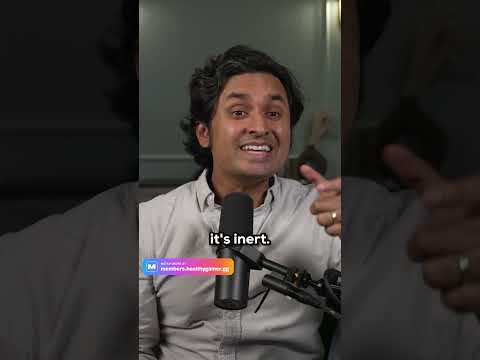
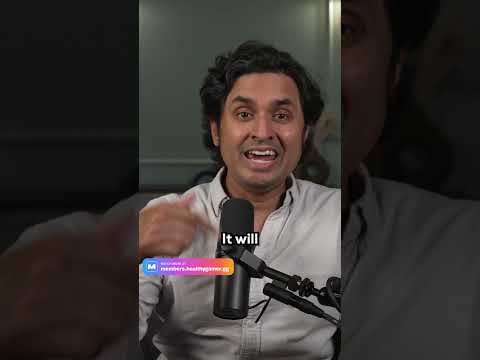
Dr. Alok Kanojia — “Dr. K” — is a licensed psychiatrist (BS, University of Texas at Austin; MD/MPH, Tufts University) who struggled with his own video-game addiction as a student before co-founding Healthy Gamer with his wife, Kruti. Today HealthyGamerGG is one of the largest mental-health-for-gamers channels on YouTube, where he talks openly, on camera, about mental health inside gaming culture.
Public-record biographical information. Dr. Kanojia and Healthy Gamer are not affiliated with, advisors to, or endorsers of this platform. “Our inspiration” is the only claim made here.


Others prove the need. None of them sit in the room.
-
Healthy Gamer
Content & coaching
Videos, coaching and a large community, started by a psychiatrist. Help you have to go looking for.16
-
Take This
Resources & training
A non-profit since 2013: guidelines and training for the games community, and quiet AFK Rooms at conventions.17
-
Safe In Our World
Awareness
A UK charity since 2019, raising awareness and pointing players and studios towards support.18
-
Discord × Crisis Text Line
Crisis support
Since 2022, US users can text trained crisis counsellors from Discord. Help at the worst moment.19
reh.ab sits in the gap between them: not content, not a campaign, not a crisis line — a specialist in the everyday room, long before anything becomes a crisis.
AI stays behind the scenes.
It's a support tool for our specialists — task lists, time tracking, technical utility. Nothing more. It never replaces a human professional.
AI is part of this field whether we like it or not.
Clinicians use it today for the work around care — notes, summaries, admin — so more of their time goes to people. We're building on how the field works, not against it.
In the American Psychological Association's 2025 survey, 56% of US psychologists had used AI tools in their work in the past year — mostly for writing and paperwork, rarely for clinical decisions.20 The same association warns that chatbots and wellness apps are no substitute for care.21 That is the line we hold: AI helps the specialist and never replaces them.
How we'd know it works.
A twelve-week pilot on three guardian servers, measured against comparable servers without a specialist. Four numbers decide whether it continues.
-
01
Wellbeing
The WHO-5 wellbeing index — five questions, opt-in, at the start and the end.22
-
02
Reaching care
Of the people referred on, how many actually reach a doctor, therapist or service.
-
03
Safety
Harassment reports and safety incidents, compared with servers that have no specialist.
-
04
Cost
Specialist hours per active player — the number that decides whether it can scale.
If wellbeing doesn't move, or safety gets worse, the model changes — or the pilot stops.
Questions.
Not yet. reh.ab is a concept project — a pitch-deck website exploring how mental-health support could live inside gaming communities. Everyone shown in the mockups is fictional.
No. A guardian server is a room where you play, with a trained professional there too. It is not therapy. It is not a diagnosis. It is not a crisis line.
If someone needs more help than the server can give, its job is to notice early and help them reach real care.
Communities like Healthy Gamer’s already show how many players want to talk about mental health. The difference here is structural: every guardian server has a licensed professional present by design, and a clear, written path from “this is a hard week” to real care.
It would be, which is why the roles are kept apart. On a guardian server a specialist supports, notices and refers — they do not treat the people they play with. If someone needs therapy, it happens elsewhere, with someone else.
That is the highest-risk part of the idea, so the rules are strict: background checks for every specialist and moderator, no private messages between staff and minors, never one adult alone with a minor in voice, and parental consent wherever the law requires it.
Licence check, background check and two interviews — one on their clinical record, one on whether they really know games. Then a match to a server by specialty and by the games they already play.
In Poland and the wider EU — which is why the mockups run on an eu-west server and the helplines on this page are European. Some of the best research on gaming and mental health is American; wherever a figure on this page is US-only, it says so.
Only where their licence allows it. Professional licences are national — in the US, even state by state — so players are matched with specialists licensed where the player lives. Anything that needs a licensed professional stays inside those borders.
Talk about mental health is health data, which the GDPR treats as a special category.23 So the rules are: no recordings, no notes about individual players without their explicit consent, data kept in the EU, and everything deleted on request.
An open question, honestly answered. The most realistic model is game studios and platforms funding guardian servers as part of player safety, with trained peer supporters on each server and one specialist supervising several — which keeps the cost per player realistic.
If you or someone you play with is in danger right now, call your local emergency number. In most EU countries you can also call 116 123 (emotional support) or 116 111 (children and young people). reh.ab is a concept for a place to play with support nearby. It is not therapy, it is not medical care, and it is not an emergency service.
A concept, researched and built end to end.
-
Problem
Reach
Mental-health support rarely reaches people where they spend their evenings. Could it live inside gaming communities instead of beside them?
-
Research
Sources
WHO, the APA and peer-reviewed work on gaming and wellbeing. Every number on this page links to its source below.
-
Design
System
One page, one type scale, one easing curve, one corner slot for every animated mark — and a working, data-driven chat mockup.
-
Access
WCAG 2.2
Keyboard and screen-reader support, 44px targets, reduced-motion and high-contrast modes, and contrast that was measured, not guessed.
Make an impact together.
reh.ab is a concept by Wojciech Lumer — research, design and front-end. Clinicians, designers and studios: I'd love to hear what you think.